

 English
 Pусский
 Français
 Deutsch
 한국어
 العربية
 Italiano
 Tiếng Việt



News Center


A193 B7 Bolts for Petroleum and Petrochemical Industries
2026-03-18 08:18:21
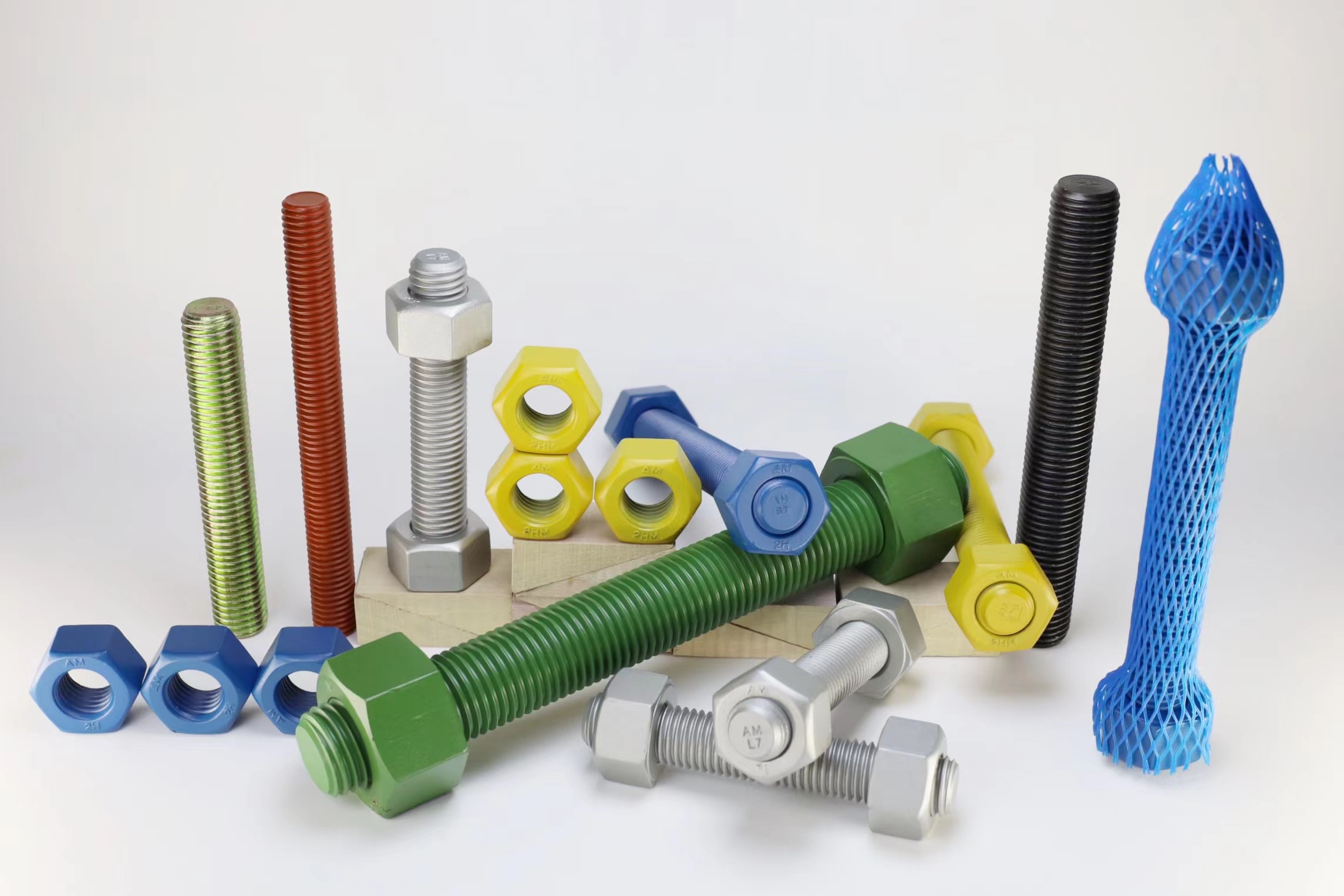
As a type of high-strength fastener, B7 bolts are widely used in petroleum, petrochemical, marine vessels and other harsh working environments. Their excellent performance and broad applicability make them irreplaceable in various industrial applications.
Basic Characteristics of B7 Bolts
B7 bolts are made of chrome-molybdenum alloy steel and processed through strict temperature-controlled quenching and tempering. This heat treatment endows B7 bolts with excellent strength and heat resistance, enabling them to withstand high-temperature environments up to 500℃. The tensile strength of standard B7 bolts is generally above 125,000 PSI, far exceeding that of ordinary carbon steel bolts, thus ensuring reliable performance under high-pressure working conditions. Such tensile strength and high-temperature adaptability make B7 bolts an ideal choice for connecting high-pressure and high-temperature pipelines and vessels.
In the petroleum and petrochemical industries, equipment usually operates under high-temperature and high-pressure conditions, especially in oil refineries, natural gas purification equipment and chemical production units. The high strength and heat resistance of B7 bolts allow them to effectively cope with these extreme conditions. B7 bolts serve as key components to ensure connection sealing and structural integrity in the assembly of high-pressure reactors, heat exchangers and pressure vessels. Meanwhile, they are also widely applied in pipeline flange connections, leveraging their superior performance to guarantee the stable operation of pipeline systems.
- Página anterior: A193 B7 Bolts for Petroleum and Petrochemical Industries
- Próxima página: Advantages of Double-End Stud Bolts

 Links
Produto
Haste rosqueada
Parafuso
Noz
Lavadora
About us
perfil de companhia
Certificação da empresa
Notícias
Notícias da indústria
Notícias da exposição
Notícias da empresa
Linha direta de serviço
+86 18013427919
E -mail: ASME@KSASME.com
Endereço: Não.
Cidade de Wuxi, província de Jiangsu, China
Boletim informativo
Endereço de email


© Todos os direitos reservados 2024 ASIMI FASTER MANUFACTURMING (WUXI) Co., LTD


 Skype

Comente
(0)